From Self-sufficiency to Financial Abundance: F.I.R.E. Explained
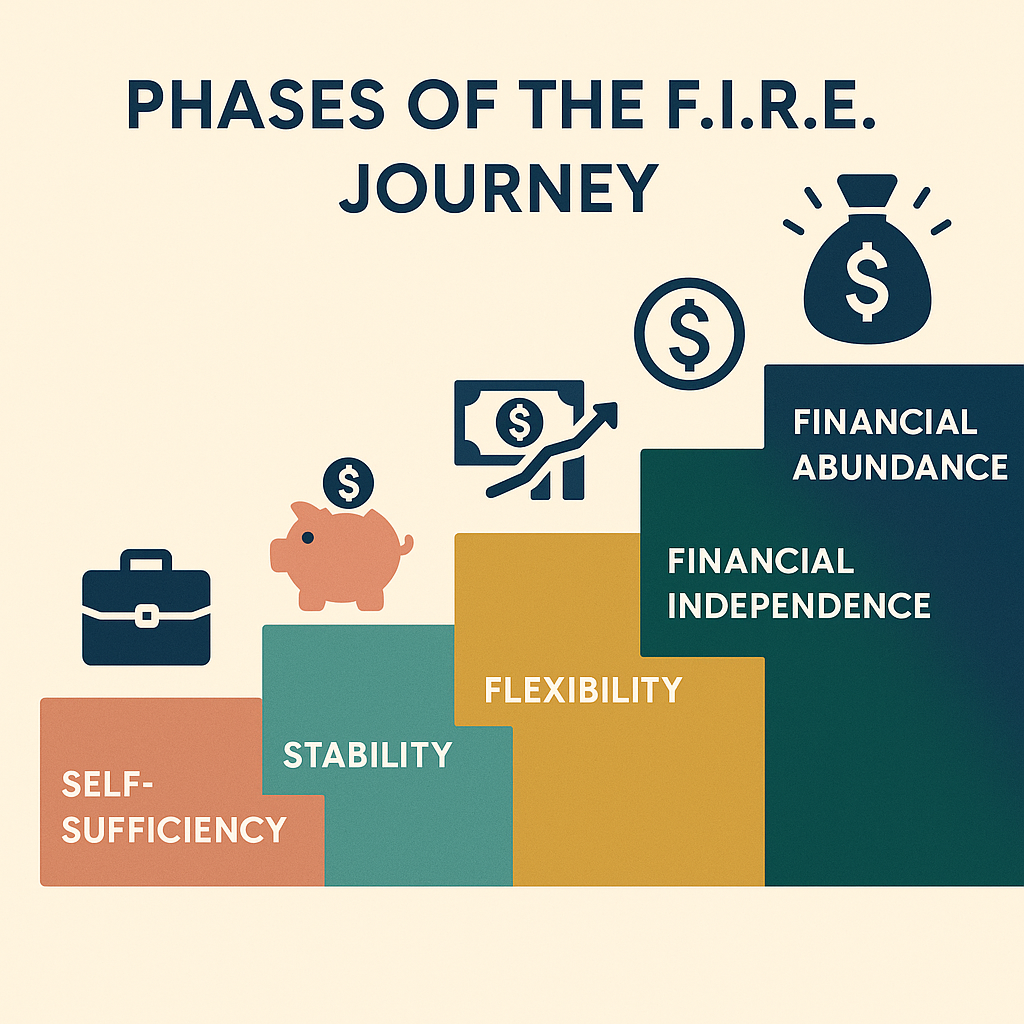
The aim of F.I.R.E. is to be wealthy, not rich. Everyone has a unique journey to F.I.R.E. This journey can be divided into five broad phases. Everyone starts from the same initial phase. However, not everyone makes it to the last phase of the F.I.R.E. journey. Let's go over these phases.
nnnnSelf-sufficiency: This is where everybody starts, and as it suggests, this phase is all about being self-sufficient enough to live your day-to-day life. Typically, this is where you are out of school and get your first job. In this phase, you do not seek any financial support. Self-sufficiency is the phase of learning to live a bare minimum life. Some people can never move to the next phase, depending on their education and skill set. One key indicator that you are in this phase is zero savings.
nnnnStability: There is more than one way people enter into this phase. Some make it to this phase by increasing the relative income to expense ratio through promotions or career growth. Others learns ways to live an extremely frugal life to squeeze out some dollars in savings. Either way, they can save money in this phase and start building an emergency fund. This phase helps to create a cushion against unforeseen expenses. Like the earlier phase, it becomes tough for many people to progress to the next phase. Most people stay stuck in this phase primarily because of the ever-expanding lifestyle, such as getting married, having children, and so on.
nnnnFlexibility: This phase is the first time people can truly work for F.I.R.E. This phase frees you from worrying about maintaining your lifestyle or facing financial emergencies such as vehicle breakdown, medical expenses, etc. "Flexibility" phase is the first time they have some extra cash that lets them explore options to utilize it. Those who failed to understand the difference between good and bad expenses or good and bad debt may fall back on the stability or self-sufficiency phases. A solid financial education in this phase helps explore growing money by investing rather than upgrading one's lifestyle. People in this phase typically look into easier investing forms, such as buying stocks or following others' advice. Without sufficient education and experience, this either becomes another active income or a bad experience, resulting in the loss of principal. People who start to grasp the philosophy of F.I.R.E. start to explore ways to generate passive income in this phase.
nnnnFinancial independence:
nnnnA small fraction of people who are disciplined in their investing and realize the power of compounding make it to this phase. They can accumulate sufficient wealth to live their life post Retirement without worrying about money. This is acceptable to most people who work until they can, and then spend the rest of their lives living modestly. In this phase, some people focus not only on financial independence post-retirement but also on retiring as early as possible. That's where the term F.I.R.E. comes from. The major difference in the mindset of people who seek fire is to stop relying on government-supported programs, such as 401(k) or Social Security benefits. People seeking F.I.R.E. focus on keeping control of money in their own hands. They explore options to build passive income streams on their own, which other groups in this phase may find extremely risky.
nnnnFinancial abundance: Only less than one percent of people reach this phase, where they build enough passive income streams that they virtually never run out of money. This is called financial abundance or building generational wealth. Being able to control their money and having a risk appetite becomes mandatory to reach financial abundance. It is unlikely to achieve financial abundance by just focusing on financial independence. Following F.I.R.E. is not negotiable to reach this phase.
nnnnTo conclude, everyone should be financially independent at the bare minimum. Reaching financial abundance is tough but possible for everyone. Shoot for that!
nnnnn